Vicki Peterson Jenks is an accomplished educator, performer, and recipient of the prestigious Percussive Arts Society’s Lifetime Achievement in Education Award. She earned a Bachelor’s Degree in Music Education at the University of Wisconsin at Stevens Point, and a Master’s Degree in Performance and Literature at Baylor University. In 1976, she founded the percussion program at the University of Texas at El Paso, as well as the professional marimba band, Repercussion. An active freelance percussionist, she has performed for 10 years with the Madison Symphony Orchestra, and 22 years as Principal Timpanist with the Wisconsin Chamber Orchestra.
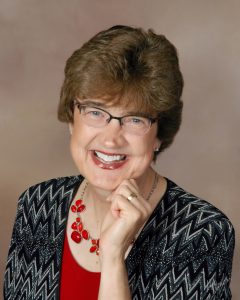 Currently serving as Master Adjudicator for the Wisconsin Schools Music Association, Ms. Jenks has also served for over forty years as Director of Percussion for the Wisconsin Youth Symphony Orchestras (WYSO) in Madison, Wisconsin. Under her direction, the WYSO Percussion Ensembles have received national recognition from the Percussive Arts Society, the National Association for Music Education, the National Band Association, the Wisconsin Music Educators Association, and the Midwest International Band and Orchestra Clinic. Moreover, under her direction, the WYSO Percussion Ensemble ensemble has performed throughout Argentina, Great Britain, Peru, Scandinavia, Western Europe, Japan, and Taiwan.
In 1980, she created, and developed the Education Department at Ward-Brodt Music Company, one of the Midwest’s premier retail music stores, and in three years, increased the student enrollment from 20 to 400. In 1985-2005, Ms. Jenks owned and operated Jenks Music Studio, which was Wisconsin’s largest private percussion studio. There she created her Total Percussive Musicianship curriculum, which led to her students perennially filling the percussion sections of Wisconsin Honor Bands and Orchestras, the Wisconsin Youth Symphony Orchestras, Carnegie Hall’s National Wind Ensemble, and a number going on to hold top positions in orchestras and universities around the globe.
When did you begin studying music?
I began my musical life as a pianist when I was nine, and was inspired by watching the Lawrence Welk show on Saturday evenings. My favorite musician on the show was Jo Ann Castle, who is an amazing pianist, and she plays ragtime like no other. Though my family did not own a piano, I would pretend to be Miss Castle playing on the armrests of our living room couch. Eventually we obtained a piano from an organization that was going out of business and owed my father money. They had no money to pay him – but they had a piano. Thank goodness for that.
Did you always study percussion?
I began studying percussion when I was 12, and I also tried my hand at the violin. Before studying percussion, I took a few lessons from a farmer in our little community in northern North Dakota, who played some fiddle. It didn’t catch on because I was going to the school basketball games, and the band was playing at halftime. And it was there that I instantly became enamored with the snare drum, and joined the band.
What made you choose percussion?
Actually percussion chose me! And it was through music that a very shy, cerebral little girl would find her vocatio – her calling.
Who were your primary teachers?
My primary teachers were Mrs. Solberg (piano for nine years), Mr. Schimke (6th grade – 12th grade) band director, Dr. James L. Moore (International Music Camp), Dr. Geary H. Larrick (University of Wisconsin Stevens Point) and Dr. Larry Vanlandingham (Baylor University).
When did you decide to pursue a career in music?
I decided to pursue a career in music almost as soon as I joined the school band. My life’s path would germinate, attending many summers at the International Music Camp (IMC), and was inspired by my friends and the faculty. IMC became my second home, and for that matter, still is!
Did you have a specific goal: teach, compose, etc.?
My goals were always very specific: to be the best music teacher I could possibly be. Initially, I was driven by degrees and awards. That changed as I grew and realized that the best teachers plant the seeds, do some watering, prune a bit, pull an occasional weed, and then step away and let the plant grow to be as it was intended.
Do you focus on a specific area of percussion, if so, did you always?
I have always specialized in Total Percussion for the Total Musician. In other words, the complete battery of band-orchestral percussion instruments. I came to global percussion during the second decade of my teaching at the United States Percussion Camp. My friends there were/are amazing! Immediately when I arrived home, I ordered just before the studio resumed for the new school year, congas, bongos, timbales, and Latin accessories. Eventually various doumbeks, djembes, etc. would be added to the glorious mix. And by doing so, my students got more excited – I wonder why?
Who impacted your musical growth the most?
My musical growth was obviously inspired by my piano teacher and school band director at first. But it crescendoed once I started studying at the International Music Camp. My students now impact me the most musically, and as a human being.
What teaching positions have you held?
I taught at the United States Percussion Camp, Lakeland College, Vandercook College, the International Music Camp, and Birch Creek Music Academy. I was an Adjunct Percussion Instructor at the University of Texas at El Paso from 1976 – 1980. I owned and operated Jenks Music Studio, which was Wisconsin’s largest percussion studio from 1987 – 2005. And since 1981, I have served as the Director of Percussion for the Wisconsin Youth Symphony Orchestras.
What percussionists have inspired you the most and why?
A wide variety of percussionists have inspired me, namely: James L. Moore, Gordon Stout, Robert Chappell, Liam Teague, Tony DiSanza, Patsy Dash, Evelyn Glennie, Ruben Alvarez, Ndugu Chancler, Johnny Lee Lane, Julie Spencer, Matthew Coley, and my students. Why? Because they are individually maestros at their instrument(s), they are humble, and they are my friends.
Is there a specific genre you enjoy performing the most?
I enjoy performing contemporary percussion ensemble works that describe a story; that are palatable to an audience and performer alike; that are victoriously performed; that are treasured; and that warm my heart and soul. Music is the best medicine I know!
What composers do you identify with and why?
I identify with such composers as: Shostakovich, Stravinsky, Stephen Sondheim, Andrew Lloyd Weber, John Cage, Charles Ives, Kevin Day, Jon D. Nelson, Phillip Mikula, Andrew Stout, Gordon Stout, and Julie Spencer. They are all unique and I have needed them during various chapters of my life to remind me of genius, beauty, integrity, spunkiness, generosity, and character. I also support young, aspiring composers as they are our future.
Do you get nervous before you play – if so, how do you deal with it?
Yes, I still get somewhat nervous performing and conducting. What helps me a lot is Tai Chi Chih’s “Six Healing Sounds” and 4-7-8 breathing developed by Dr. Andrew Weil. It is an ancient Yoga breathing technique which one can easily find on the internet. I also take Yoga classes for flexibility, strength, and better overall quality of life. I also pray for centered focus, and to connect with my/our audience. Music performance is not just about the performer on stage. It’s a two-way street and we must always play to the house, and not just for ourselves. Since we’re blessed with the gift of music, we simply give it to our audience. When they applaud, they are really saying thank you. When we bow, we are really saying you are most welcome!
Do you ever make a mistake while performing? If so, how do you go about resolving it?
Of course I make mistakes when I perform. There are reasons, certainly. For me the primary reason I have found is that I am overanalyzing, and my Inner Police Person is saying, watch out for this section coming up…you always struggle with it! My advice is to ignore the Inner Police Person, whom each of us has created.
Has your practice regimen changed from when you were a student? And how do you keep your technique fresh on all primary percussion instruments?
My practice regimen is very different from when I was a student many years ago. Then it was primarily about developing technique and trying to be perfect. And when I wasn’t, or couldn’t be perfect, I then self-flagellated. Now my regimen isn’t even a regimen because that’s far too militaristic in my mind. It is brushing off the dust, playing tunes from the past, sight playing, and creating music. I also practice speaking to the audience, performing, and bowing. Of course I do this in my music studio, the great room, or even outdoors. I do this in sets of three to see if there is consistency, improvement, and quality in my performance. Self-analyzing a bit, but not too much. I have found that taking a nature break like walking, playing with my cats, listening to sounds, texting my best friends, is very beneficial. Also, sleep is very important! People work themselves much too hard and then wonder why aren’t I at my optimum level anymore? Self-awareness is really critical.
I have to be honest. Keeping my technique fresh on all the primary percussion instruments is a big struggle for me. I love that much that we do, technically speaking with percussion, is transferrable. Dancing should automatically be a part of our percussive music making too! I think we try to act so stoic much of the time. When music moves you to dance, then dance! Remember to smile, and laugh for life is short. If everything you do on stage is cerebral, serious, and interesting only to you the performer…you’ve misunderstood the why of performing: it’s a gift for your audience. Adding some glitzy bows, ribbons, colorful paper, and balloons should be mandatory.
How do you define a good musician and a good teacher? And has your definition of both changed from when you were a student to the present?
A good musician is an individual comfortable in their musical skin, aware of the challenges of the instrument, but in love with those challenges. A person who radiates joy with this gift they received (likely in utero), and shares it with everyone. And in collaboration with others, is happy to allow them the opportunity to shine, and be in the limelight.
Whereas a good teacher encourages his/her students, especially during difficult times; is always respectful and kind; and finds common ground with others. A person that understands fully that mistakes will happen (sometimes more than you’d ever think), and gets through them quickly without obsessing. One who is continually in quest mode to learn more, and honors life’s joy with all. Music is the ultimate balm for the soul, and the best medicine for recuperating and celebrating!
I’ve always been in love with teaching from second grade to now – I will never reach the zenith of teaching, and I never want to. Every day I wake up is in and of itself a blessing to learn, and to teach. May it always be that.
Do you think that performing and teaching are intrinsically intertwined? If so, how and why?
Performing and Teaching are essentially halves of one another and inextricably intertwined for life. Every time you play any gig, no matter the environment, for pay or pro bono, one learns something. And because we as performers never hog what we have learned, we tell it to others. Maybe they already know it. Maybe they don’t. We simply share.
Has teaching made you a better musician, if so how and why?
Teaching has definitely, and without a shadow of a doubt, made me a better performer. First of all, I tend to be cerebral. That means I self-analyze and I think linearly. If something works for me, I want to instantly incorporate it. Why wait? Teaching, learning, and performing – they are married.
Knowing what you know today, would you change anything about how you prepared for your career? If so, what and why?
I wouldn’t change all that much in how I prepared for my career other than being a constant questioner; stepping forward more, and not worrying what other people think of me. It’s not about the applause, it’s about growth, vitality, soulfulness, adoring what you do, and sharing.
What words of wisdom would you share with a student who aspires to make a career as a performer and as an educator?
First, I would recommend that everyone read the wonderful book, Words of Wisdom, by, Sandra Sturtz. Moreover, keep in mind that we are all placed on this earth for a purpose. For those who are considering a career as a performer and educator, do not stop being a student, and never rest on your laurels! In the grand scheme of things, they don’t really matter. What does, is that you do what you love, and what you were placed on Earth to do. Remain honest, authentic, accountable, generous, kind, gentle, joyful, and be a constant learner. Do not tolerate jerks, stand up for yourself, find common ground with compassion, and never, ever, give up!