
Founder of the auditionhacker academy, which helps orchestral-track musicians win auditions, Rob Knopper has also served as faculty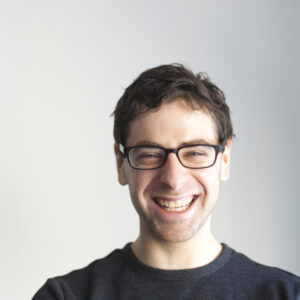 member at the Verbier Festival, the Interlochen Arts Camp, and the Stellenbosch International Chamber Music Festival in South Africa. His students have won auditions and advanced to the finals with such major orchestras as the Philadelphia Orchestra, the National Symphony Orchestra, and the London Symphony Orchestra to name a few.
As a performer, Mr. Knopper is currently serving as a percussionist in the Metropolitan Opera Orchestra. He has also performed with the San Francisco Symphony, the Detroit Symphony, and recorded the first-ever complete album of Jacques Delécluse’s, Douze Études for Snare Drum.
When did you begin studying music?
I started studying drum set in the fourth grade and switched to classical percussion in the ninth.
Did you always study percussion?
In addition to percussion, I studied composition, guitar, and piano.
What made you choose percussion?
My favorite music was (and is) progressive rock from the 70’s. The great drummers of that time: Bill Bruford (Yes) and Phil Collins (Genesis) motivated me to play drums.
Who were your primary teachers?
I had many: Brian Jones – Dallas Symphony, Michael Udow – University of Michigan, Keith Aleo – Interlochen, Greg Zuber – Juilliard, Joe Pereira – Juilliard, and Daniel Druckman – Juilliard.
When did you decide to pursue a career in music?
I learned about how you can get a fair shot at winning an orchestra audition when I studied at Interlochen the summer after my freshman year. I also learned about all the union protections that orchestra musicians get like tenure, salary, and pension. All of that made it crystal clear that pursuing orchestral percussion was exactly my path.
Did you have a specific goal?
I just wanted to win an orchestral job and have a stable career.
Do you focus on a specific area of percussion?
I tend to be laser focused on my biggest areas of weakness. So I’ve been through phases where I obsessed over timpani and mallets. Snare drum ended up being my Achilles’ heel because it’s the most complex technically, and most impacted by my nerves during auditions. I wanted to conquer my problems on snare drum, which led to winning my auditions and recording the Delécluse album. So that is probably what I play most.
Who impacted your musical growth the most?
It’s really hard to pinpoint one single person. But I would like to highlight: Keith Aleo (Interlochen) showed me the path to becoming a professional orchestral musician; Brian Jones (Timpanist, Dallas Symphony) who set up the foundation of my technique and mindset towards percussion with over three years of private study in high school; and Rick Catherman (Band Director, Chelsea High School) who inspired, motivated, and energized me – not to mention gave me a place to practice. Without any one of them, I would likely be in a totally different field.
What teaching positions have you held?
My main teaching pursuit is helping orchestral-track musicians learn to prepare for auditions. I do that through my online school auditionhacker academy. Outside of that, I have taught only at summer festivals: Verbier Festival, Interlochen Arts Camp, and the Stellenbosch International Chamber Music Festival.
What percussionists have inspired you the most?
Bob Becker inspired me with his incredible commitment to achieving true mastery of ragtime xylophone, which is something that I’ve aspired to do with any pursuit. And my teacher in college, Joe Pereira, who after losing the principal timpani audition in his own orchestra to Markus Rhoten, channeled that dejection into an incredible audition preparation process that I got to witness when he won the Los Angeles Philharmonic audition.
Is there a specific genre you enjoy performing the most?
I still love rock music and enjoy playing drum set the most.
What composers do you identify with most?
My favorite classical composers are Sibelius and Puccini. I love the late romantic exploration of tonality and melody.
Do you get nervous before you play?
Yes! I had incredibly debilitating nerves especially for auditions. Through a combination of better technique and practice strategies; more effective note-learning strategies that allowed me to muscle-memorize music; tons more realistic mock auditions, and beta blockers, I was able to manage and overcome the problem with shaking during auditions. Most of my audition preparation process is based on how to overcome nerves since it was such an obstacle for me.
Do you ever make a mistake while performing?
Yes, of course. Mistakes happen. The goal is to lower the percentage of mistakes. For solutions during the performance, it mostly has to do with directing your attention forward. Your eyes and mind should always be on what is coming up, which helps reduce the impact of mistakes that already happened. The best solution is to improve the way you prepare; which includes increasing excerpt research and improving your process of learning notes.
Has your practice regimen changed from when you were a student?
I have very highly developed technique and language building workout routines that evolved over many years. Now I tend to keep things fresh when I am going to be playing something soon, and I trust my practice methods to build my technique starting a couple weeks ahead of the first rehearsal.
Do you think that performing and teaching are intrinsically intertwined?
Yes. For instance, if I make an improvement to my phrasing, or the way I hold the stick for a specific technique, I then try to figure out how to put that into words to explain it to someone else. I find that this causes new ideas and improvements that build on top of the original breakthrough.
Has teaching made you a better musician?
Yes, for the same reason I mentioned previously. Also, the feeling of confidence that I get playing in front of a student is something that I can summon when I’m performing, even when I don’t feel that confident.
Knowing what you know today, would you change how you prepared for your career?
A lot of the experience of growing as a student is a combination of anxiety and desperate experimentation to solve problems. It would have helped me to know that those feelings were actually healthy and causing essential improvements. Although, to be honest, if I would have felt less of that anxiety, I might not have searched so hard for solutions over a sustained period of time and found those answers.
I always say that if I could go back in time and teach myself one thing it would have been the process I developed for final auditions that I used to win my jobs. But the truth is that I could never have guessed it – the only way to find it was to go through the hard work of trying things that didn’t work, over and over, until I found the iteration that worked.
What are auditionhacker and percussionhacker, and what motivated you to create both?
They are my online school where I help musicians learn how to prepare for auditions. I have been teaching online since 2014 and it’s been incredibly fulfilling. I have students who won auditions and made it to the finals for major orchestras all over the world.
What words of wisdom would you like to share with students?
It may seem like a daunting and impossible task, but somebody has to win these auditions. It’s going to be the person who dedicates a sustained number of years into intense self-improvement, and a focus on the musical skills that result in a career – whether that is as an orchestral musician, a teacher, etc. There’s no reason why you can’t achieve what others have achieved. There’s nothing magical about becoming a great musician. It’s just a series of bite-sized, solvable problems until you get there. Keep going and find out how much you can personally achieve!
If you wish to learn more about Mr. Knopper, please visit his website: robknopper.com