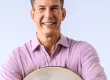
Casey Cangelosi is an Associate Professor and Director of Percussion Studies at James Madison University. He holds music degrees from Rice University, The Boston 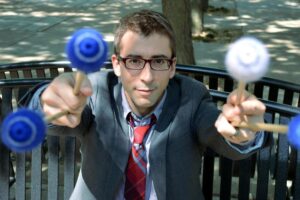 Conservatory, and Utah State University. A sought after commissioned composer, Professor Cangelosi is deemed by colleagues and critics alike as the Paganini of Percussion and The voice of a new generation.
Endorsed by Majestic, Mapex, Innovative Percussion, Zildjian, Grover Pro Percussion, Remo, and Beiner Bagsand, he is often invited to perform and/or present at educational institutions, music festivals, and educational seminars. In addition to having been a visiting guest artist in Italy, Germany, Costa Rica, Mexico, Argentina, Croatia, Sweden, Taiwan, and the United States, Professor Cangelosi has also appeared at The Midwest Clinic, and at Percussive Arts Society International Conference Showcase Concerts.
When did you begin studying music?
I was very fortunate to start in elementary school. My parents were not pushy about any studies (music or anything else), but fully supported me and my siblings’ interests. I showed some love for drumming on pots and pans in the kitchen, and more so after sitting behind a neighbor’s drum set. I took some lessons with that neighbor, but found it too hard. I vividly remember my foot getting too tired trying to tap a pulse, I was maybe in third grade then. About a year later my parents connected me with the local university (Utah State University) percussion teacher, a wonderful guy Dennis Griffin who was teaching all levels.
Did you always study percussion?
Yes, percussion was always my main interest. I think I was aware very early that it is hard enough to be proficient on just one instrument. I flirted with a few other instruments when I was very young, but probably nothing more than most kids do. While pursuing my undergraduate degree I was required to take one semester of another instrument and by then I was very interested in composition. So I arranged with a friend, a great guitar player named Jackson Evans (look him up!), to teach me guitar with a focus on composing for it. I’m sure I was a terrible student, and he was incredibly kind and patient.
What made you choose percussion?
I’m not really sure since it was so long ago, but I suspect it was the same appeal as it is for most kids: hit stuff and sound cool. I grew up around a lot of music in the house, my siblings primarily, cassette tapes everywhere, and MTV (when there was primarily music on MTV).
Who were your primary teachers?
Dennis Griffin certainly gets the lion’s share of credit for my musical upbringing. I studied with him from fourth grade through college. Only now that I’m a teacher myself do I realize how special and rare that is. Lucky. He taught me percussion as well as the best teachers do, but we also looked at scores, listened and followed, talked about writing, talked about Finale (notation software) etc… He also taught me about Evelyn Glennie, Keiko Abe, and William Kraft. I had Katarzyna Mycka’s first CD when I was in high school because of him. Again, lucky. My school teachers were great as well. Bill Monday and Greg Wheeler in middle school, and Dan Stowell in high school. I was a difficult middle school student: class clown, goofing off in the back, that sort of thing. Mr. Monday and Mr. Wheeler were amazing for giving me so many chances. I’m glad they did, I really loved being in the band there. Mr. Stowell’s program (high school) was one of the few programs that had a separate percussion class. That was not common back then as it is now. This, of course, allowed us a lot more individual attention and to play percussion ensembles in class. He also allowed room for our own creative projects. My friends and I wrote and choreographed little STOMP-like performances, and Mr. Stowell would program us on school assemblies and concerts. Lucky.
When did you decide to pursue a career in music?
Probably very late. I was serious about music for a long time, but didn’t take real life into consideration until around grad school. I was very comfortable with what I called, The Starbucks Plan. I would work any job for little money, but would be happy so long as I could play and write, even if it was just by myself or with a few friends. That was my young mentality, of course real life happens and then this can no longer work. It’s not something I advise today, but it did help me stay on message. I told myself, Casey, just get really good, you’ll have options if you’re really good…just do that.
Did you have a specific goal?
Not a very focused goal. Of course I was/am very happy to do any of those things for money. But my favorite things to do were, and still are, write music and then play that music. For a kid, thanks to my teachers, I think I had a pretty realistic outlook and what was possible career-wise. I knew it would probably be a combination of teaching, playing, and writing. I suppose I embraced it early.
Do you focus on a specific area of percussion?
We all go through phases of interest it seems. Lately my focus has been these hybrid drum set and multi-percussion compositions with audio tracks: Strange Joy, Subscribe Like…, Autodidact. Like most percussionists, I’ve done bursts of focus on individual instruments. While never abandoning any one interest entirely, we have to be intensive with one instrument over others, sometimes for years. My order of focus since childhood probably went something like this: drum set and snare drum, marimba, congas, multi-percussion, orchestral percussion, and now drum set again. Again, I wasn’t playing any of these instruments exclusively, just spending more time on each. I follow the conventional wisdom I share with my students: I encourage them to be well-rounded, but also have a focal instrument that they can really shine on.
Who impacted your musical growth the most?
My childhood teacher, Dennis Griffin, is at the very top. We had so many years together that it would have to be him. Important years too. We did composition, theory, score study, and notation software. He just brought these in when/where appropriate, so I was never intimidated or thought of them as anything outside of regular study. Nancy Zeltsman was a huge influence as well; how she thought about music and the types of things she looked for and considered important. I remember her telling me, Your technique is good, we don’t need to do anything with it. And then we never talked about it even once for two years. People are baffled by that story, and ask, Wait…if you didn’t talk about technique…what the heck did you do for two years? Well, that’s exactly why Nancy is so special. She has so so so much more to teach then how to physically play the instrument.
What teaching positions have you held?
My first teaching job was as an Adjunct at Concord University in West Virginia. I was there for six years and was promoted to Instructor, I believe in my third year. It was fun because the whole department was just a few of us. Maybe eight people in total, and we ran the whole show. I learned SO much this way and feel really fortunate to have been immersed in a program at all levels. I taught so many things that an applied instrumental teacher might not: Music Appreciation, Remedial Theory, 20th Century Music History, Jazz Band, Computer Tech, Jazz Improvisation, an Analysis Class I created, and all the regular Percussion Classes. This was a wonderful first job for me, and without a DMA I feel lucky to have had it. From there I went to James Madison University (JMU) where I am today and plan on staying. I love it here and could not ask for something better. Other percussionists have asked where I’ll be going next or if I’m going for that big job, but I’m not. I have not applied for a single other job since being hired at JMU, and won’t. It’s great here, and kids and family of course come first. I decided a long time ago that the ladder climb will be a short one for me.
What percussionists have inspired you the most?
The list is long of course, but at top has to be the queen herself, Eveyln Glennie. She was my go-to for listening and my first and longest standing hero. Her CD’s in the 90’s were the most accessible to me: Rhythm Song, Wind in the Bamboo Grove, the Music of Joseph Schwantner CD. She is such an important icon for us – proof that a percussionist can play all the biggest stages, and in the center spotlight as a soloist. All while performing contemporary repertoire that isn’t always the most audience friendly. Amazing.
Is there a specific genre you enjoy performing the most?
I really enjoy our contemporary visual repertoire. Some recent favorites are: Theirry de Mey’s pieces Table Music and Silence Must Be, Mary Ellen Child’s Click, and Mark Applebaum’s Straightjacket . I’ve always believed that the visual aspect of performing matters and it’s great to see pieces that make it more than an option, but actually built into the composition.
What composers do you identify with?
Writing visual pieces was something I was doing when I was very young. I got a lot of practice writing choreography into music in high school when my friends and I would do our little STOMP- like shows. Discovering the composers: Theirry de Mey, Mary Ellen Childs, and Mark Applebaum, showed me that visual pieces can have scope, metaphor, form, theme, development etc… all the meaty stuff that our best compositions can have. You can easily see this in pieces like: Bad Touch, Plato’s Cave, Lola Zaza, and my Shape Lesson exercises.
Do you get nervous before you play?
Not so much anymore, but certainly when I was younger. It was a long fix that came with time and experience, and knowing how prepared I needed to feel. When working on this with students, I try to approach it as a long-term goal. We need to have a history of success and good feelings around performance in order to truly be confident. I feel like this is best solved by having a good culture around performing and the preparation leading up to it. You just have to perform a lot, even if it’s something little and simple.
Do you ever make a mistake while performing?
Of course: wrong notes, wrong rhythm, skipped a line, dropped a stick, broke a stick, wrong page on the stand, audio engineer didn’t push play, missed an entrance, played on the wrong timp., inverted the cymbals. Just play through it and try to not let one mistake turn into others. Mistakes can lead to really cool moments sometimes, and if you have good performance hygiene, mistakes are not a big deal. I try very hard to have no mistakes, but they happen and it’s fine.
Has your practice regimen changed from when you were a student?
Yes, very much. I don’t think we can possibly keep up the practice routine that we had when we were younger, and that was never the goal anyway, right? How many full-time working parents are still practicing six hours a day? None. We worked really hard when we were younger so that now we only need to dust off a technique when it’s needed. Teaching keeps my technique fresh on the primary instruments and on accessories like cymbals, tambourine, and triangle. In lessons I primarily teach timpani, mallets, snare drum, and drum set. So even if there’s no gig or recital to prepare for, weekly teaching keeps my hands moving.
How do you define a good musician and a good teacher?
After hosting and publishing 300+ podcast episodes, I’ve learned that people in our field love to get esoteric when it comes to these definitions, and the conversation usually moves to a philosophical critique on the word good. There are so many things in our field that are subjective, hard to explain, and bizarre, so I think it’s important to stay literal where we can. For me, this one is pretty simple. A good teacher is someone who does a good job teaching. Meaning their students get tangible positive results: the students meet their goals, pass their juries, win the gig, placed in the competition etc… Likewise for a musician, you’re good if you’re getting called back, or if you won the gig etc… I believe we harm students by pontificating too broadly about what it means to be good. This can muddy goals and blur objectives into personal intrusive spaces. Just sincerely help them with their musicianship, that is the best thing we can do for them.
Do you think that performing and teaching are intrinsically intertwined?
Not really – keeping it literal again since you can perform without teaching. However, I do think learning is intertwined with everything we do. We’re always learning, right?
Has teaching made you a better musician?
Of course. There’s a lot of indirect help we get from teaching: being able to explain something helps our own understanding of it, or the hours at an instrument with students etc… And teaching has taught me countless things directly too: be it my students’ ideas, how they view music, or a composition, and/or tips they’ve picked up from other teachers. They are the best source for fresh insight and perspective. And they’re the best teachers for teaching us how to teach.
What usually inspires you to compose?
I’ve been lucky, ideas seem to come easily. It’s really easy for me to feel inspired, there’s just so much wonderful stuff out there. Like most of us, I feel inspired when I see other peoples’ good work: whether it be at a concert or lecture; talking with a colleague about their work; having an inspiring lesson with a student; being at PASIC; listening to a good album; seeing some cool art; or conversations with my wife about her work. Those experiences always give me a surge of motivation. I’m often asked the common question of where ideas come from. I’ve struggled to give a helpful or even interesting answer. I haven’t the first clue where those split-second instant ideas come from, I don’t think anyone really knows. I very much agree with the saying, 1% inspiration and 99% perspiration. For me this is completely true. The inspiring part can be very quick and short and the rest is simply hard work. Those short freebies are nice, but we should also think of inspiration as an active process; something to look for, find, develop and work on. It is something you can actually practice and get good at. Life is too short to wait for those out of thin air freebie ideas to show up. If you want to get anything done you have to take control of that for yourself.
How do you feel when your work is performed differently than you intended?
Often there are happy accidents with great results or new interpretations that are better than what I originally imagined. On the other hand a lot of my music, especially the earlier stuff, is driven by an exploration to find new virtuosity on our instruments. This is great in some ways but has also led to a lot of disappointing performances. I’m often surprised how low the standards can be out there. I’ve seen many performances and recordings where a huge percentage of the notes are just…not there. There are many pieces that are simply outside my reach and ability for one reason or another, but I recognize this and hold a standard where I simply don’t play such pieces until I’m ready to.
What would you like others to know about your compositions?
I feel really fortunate that some of you are listening and taking an interest. There is so much wonderful stuff out there, so the fact that some of you are paying attention here is really a blessing and a dream come true – thank you. I also believe this craft has something other than entertainment to give. Of course I sometimes receive the criticism, That’s weird or Why write that? I believe I try to express to my students that the primary goal of art isn’t necessarily to provide entertainment. There’s of course nothing wrong with entertainment and I consume more entertaining music than any. There’s easily more entertainment out there for me than I’ll ever be able to finish, so are we really doing anything if we’re just composing more entertaining stuff? I try to experience art on different levels: its purpose, intent, its structure, its backstory, construction, and its meaning. I’ve come to think good art has more ingredients than something that’s just pleasant to see or hear. I don’t always hit the mark on this when writing, but I try to.
Knowing what you know today, would you change how you prepared for your career?
Yes of course, I would have focused more on being well-rounded. I spent a lot of time on trying to be as virtuosic as possible, which has been a very important ingredient in my career and set off interest in my compositions and granted me opportunities to perform. Now in my 40’s, I wish there were some other things I spent more time on. I can still play everything I used to, my body has held up for now, but virtuosity simply isn’t as interesting to me as when I was 20. Though I also wonder if this is just a symptom of how vast percussion, music, and art are. As our appeals develop it would only be natural that we would want our abilities to change along with them, right? So, I would change that about myself. At the same time I am 100% happy with where I studied, all my teachers, and the overall net experience. I’ve come to believe that I had some of the best music history and music theory courses ever possible. I wouldn’t change the path or the stops along the way, that was all really great.
What words of wisdom would you like to share with students?
It is there for you to have if you want it. It’s a path that’s very easy to see, with much clarity in what you need to do, but it’s difficult and competitive. You will need to work very very hard and take care of yourself along the way. It’s worth it and you can do it.
If you would like to learn more about Professor Cangelosi, please visit his website at: https://www.caseycangelosi.com/