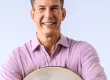
Principal Percussionist of the Saint Louis Symphony Orchestra, William J. James earned a Bachelor of Music from Northwestern University, and a Master of Music from the New England Conservatory. He has performed with many outstanding ensembles such as: the Boston Symphony Orchestra, the Chicago Symphony Orchestra, the North Carolina Symphony, the San Diego Symphony, the Chicago Civic Orchestra, the Tanglewood Festival Orchestra, the New World Symphony, and the Chautauqua Festival Orchestra. An artist with Zildjian, Malletech, Evans Drumheads, Grover Pro Percussion, and Beetle Percussion Products, Mr. James has also performed several solo recitals across the country, and as a soloist with the Saint Louis Symphony Orchestra, and the New World Symphony. In addition, he performs regularly with the Pulitzer Foundation Chamber Music Series, and in a Percussion and Piano Duo with Peter Henderson.
As an educator, Mr. James served as a Guest Lecturer of Percussion at the University of Missouri; has a studio of local students in Saint Louis; has presented countless masterclasses across the country at universities, summer festivals, Days of Percussion, and at the Percussive Arts Society’s International Convention. He has also served on the Percussive Arts Society’s Symphonic Committee, and his scholarly articles have been published in its publication, Percussive Notes. Moreover, Mr. James’ book, The Modern Concert Snare Drum Roll has been met with critical acclaim; and his video series, The Repertoire, has been deemed an incredibly ambitious project which presents the entire standard audition repertoire with accompanying tutorials for each work performed.
When did you begin studying music?
I started on violin when I was four or five. I played for about two years. I then started piano late in elementary school through early middle school. I was not drawn to either but had positive experiences. In middle school I wanted to join the band and students had to play a wind instrument before they were permitted to switch to percussion. So I played trombone for the first semester and then switched to percussion.
What made you choose percussion?
I wanted to learn how to play the drum set and I liked the idea of playing multiple instruments instead of just one.
Who were your primary teachers?
I studied with Bill Pendergrass and Wayne Viar in high school. They were great teachers and gave me the right guidance to improve, but also gave me the freedom to let me choose my own path. Michael Burritt and Jim Ross were my primary teachers in college, and both were what I needed at the time. Mike got my overall percussion chops strong on everything and Jim was my intro into the orchestral world. I really didn’t know which area of percussion I wanted to pursue when I went to college, but after my experience with them, I knew it was with an orchestra. I also studied with Will Hudgins in graduate school, and he too was the perfect teacher for me at that time. I knew I wanted to get ready for auditions, and Will and I thought a lot alike on how to prepare. It was a two year intensive study into all the core repertoire. Post graduate school, I started to play for Chris Deviney a lot, and he became a great coach/mentor as I was taking auditions.
When did you decide to pursue a career in music?
I wouldn’t say I ever had a moment, but just a long slow journey. It was definitely my most passionate area in high school, so it was the obvious choice as a major in college. I went into it knowing that most people realize within the first year whether this major is for them. I thought if music was too much for me, I could always transfer. Thankfully college was a great experience and I just kept going and progressing.
Do you focus on a specific area of percussion?
Now I am strictly an orchestral percussionist. I used to play more drum set and marimba solos but my time has limited that. I would love to play more marimba in the future.
Who impacted your musical growth the most?
It has to be a combination of my teachers and perhaps the Chicago Symphony as a whole. I was incredibly lucky to have the right teachers at the right time. They all had a huge impact on my playing and growth. The Chicago Symphony isn’t a person, but my proximity to the orchestra while I was an undergrad had a huge effect on me. I saw a ton of concerts and was able to play in the Civic Orchestra. These experiences helped guide me toward the orchestral path.
What teaching positions have you held?
I have taught privately and have been a Guest Lecturer at the University of Missouri
What percussionists have inspired you the most?
I have to go back to my primary teachers. They influenced both the way I play technically and musically. Outside of those obvious influences, I really enjoyed watching Vadim Karpinos play in Chicago; Alan Abel at many PASICs; as well as Cynthia Yeh, Matt Strauss, and Jake Nissly. I also am inspired on a daily basis by Alan Stewart, Kevin Ritenaur, and Shannon Wood with the St Louis Symphony Orchestra. They are tremendous players that perform at a highly consistent level.
Is there a specific genre you enjoy performing the most?
I love playing American and Russian music the most. Composers of this genre resonate with me because I believe they wrote really well for percussion. Part of the beauty of my job is that I get to play such a wide variety of music, and I am never stuck playing the same thing over and over.
What composers do you identify with?
Bach, Mahler, Strauss, Shostakovich, Prokofiev, Copland, Stravinsky, and Adams. I believe Bach is western music at its best and most simplest form. I never get tired of his music. The rest wrote extremely well for percussion in an orchestral setting, and let us highlight and bring texture to what everyone else is doing.
Do you get nervous before you play?
I do for certain repertoire. Experience is the best cure for nerves. The more you do something the more comfortable it becomes. I try to replicate performances as much as possible at home. Sometimes it’s practicing simple things like accurately counting rests between entrances, or switching between instruments. Those may seem like silly things to practice, but oftentimes that’s what really gets messed up, not the actual playing. For hard repertoire or big concerts, I try to stick to the same pre-concert routine I would for any other concert. I do what I feel I need to do to be prepared. If I have done the proper preparation, then I need to trust that. Repeating passages over and over before a concert I think actually increases anxiety. I also try to embrace my nerves by becoming hyper-focused and channeling it into better playing.
Do you ever make a mistake while performing?
Of course I do! I make plenty of mistakes. Both large and small. In live music the biggest thing is moving on as quickly as possible. Sure there can be time for reflection on what could be better, but the concert is not the time. Move on and get back with the group as quickly as possible.
Has your practice regimen changed from when you were a student?
Very much so. A lot of that has to do with having a family and my practice time is much more limited than it used to be. Rather than practice when I want to, and when is best for me, it just happens when it happens. But I do think I have gotten a lot more efficient with my practice as I have aged. I have learned that I absorb more when I practice for short periods consistently rather than during long practice sessions. I often say I want to practice as little as possible. I don’t mean that I don’t want to practice, or even for long periods of time. It means that my focus is on efficiency rather than length of time. I find comfort in a lot of maintenance practice. I still do stick control for a few minutes a day, and the Stevens’ exercises on marimba. This reinforces my muscle memory and supports good technique. It’s a good way to just start the session for a few minutes. Having said that, I also try to find new exercises and routines to keep everything fresh. Playing new repertoire every week helps with that too!
How do you define a good musician and a good teacher?
I would say a good musician is someone who is hyper aware of both themselves and those around them. I suppose you could bring pedagogy into being a good musician, but I’m not sure if knowing everything about the music means you are the best player. The best players I have played with usually have the biggest ears and adjust the fastest. I believe the best teachers are the ones who adjust their teaching to each student rather than teach the same way to everyone. Each student is different with varying strengths, weaknesses, and personalities.
Do you think that performing and teaching are intrinsically intertwined?
I’m not sure I find a huge parallel between the two. Obviously there are plenty of people who are good at both, or only one. But the skill sets I find to be very different. I suppose you have to be a good listener in both worlds, but in different ways.
Has teaching made you a better musician?
It has made me a better musician for sure. Teaching forces you to explain things in a concrete way, which means you really have to understand the concept inside and out!
What is The Repertoire, and what inspired you to create it?
The Repertoire is a resource of the most commonly asked percussion excerpts at auditions. Because percussion is so visual, I knew it had to be both an audio and video recording. Plenty of people have made recordings of themselves playing excerpts, but I wanted to make a definitive recording at an actual concert hall, not just a practice room. It took a few years and many hours of practicing and recording, but I am very happy with the result. I don’t think there is anything out there that compares. It is available on my personal website, as well as at The Percussion Conservatory.
Knowing what you know today, would you change how you prepared for your career?
I wouldn’t change much because I believe my journey is part of the reason where I am today. I would tell my younger self to trust my instincts more. As a student, it’s easy to be self-conscious or second guess yourself. I have found that our instincts are for a reason. I wish I would have trusted my instincts more as I came of age.
What words of wisdom would you like to share with students?
Be totally committed and be willing to work harder and smarter than everyone else around you. If you feel like you have a calling or true desire to pursue music, then you should do it. But understand it’s a difficult field with high demand and little supply of jobs. To separate yourself you have to obviously have the talent but I think even more so, the willingness to do more than everyone else. Most do not have that desire. A work ethic and drive will take you far.
If you would like to learn more about Mr. James, please visit his website at: www.williamjamespercussion.com